
A roundup of innovative enterprise deployments and announcements.
Summary
Twimbit AI Radar is a monthly report series that recaps innovative AI deployments and announcements in telecommunications, financial services, and customer experience fields of practice. It also offers insights into companies deploying AI, aimed at assisting business executives and technology leaders develop their own AI projects and long-term strategies.
In our previous Twimbit AI Radar on the telecommunications industries, we covered how industry leaders like Reliance Jio expands it’s GenAI platform Jio Brain to boosts 5G network management to how KT developed AI powered phissing detection system with real-time alerts.
Introduction
The telecommunications industry is entering a transformative era, driven by advancements in AI that promise to redefine business models and customer interactions. Investments in AI infrastructure, such as The Stargate Project—a $500 billion initiative to enhance global AI capabilities—serve as a catalyst for industries, including telecom, to embrace scalable, high-performance solutions. While Stargate’s primary aim is to build cutting-edge AI ecosystems, its ripple effects enable telecom operators to address challenges unique to their domain, such as real-time data handling, network optimization, and personalized customer engagement at scale.
For telcos, these advancements are more than just technological upgrades; they are strategic enablers of growth and innovation. Companies like SK Telecom are leveraging GPUaaS to accelerate AI development, delivering faster solutions while managing costs. LG Uplus’s on-device AI agents, designed for fraud detection and seamless customer interactions, demonstrate how edge computing can redefine service reliability and user trust. These are not isolated examples; they reflect a broader trend of telcos adopting AI to create competitive differentiation.
The message is clear: telecom operators that effectively integrate AI into their operations are not only addressing operational inefficiencies but are also setting the stage for long-term value creation.
This edition of Twimbit AI Radar explores these groundbreaking deployments and their broader implications, offering a strategic lens into how AI is shaping the future of telecommunications.
SK Telecom Launches AI Data Center-Based GPUaaS for Scalable AI Solutions
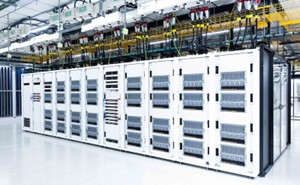
SK Telecom has officially launched SKT GPU-as-a-Service (GPUaaS) at its AI Data Center (AIDC) in Gasan, Seoul, South Korea. This on-demand AI cloud service is designed to provide businesses with scalable GPU resources to accelerate AI development and deployment.
To ensure stable GPU supply and advanced capabilities, SK Telecom has partnered with Lambda, a global GPU cloud company, as part of its AIDC business strategy. The service offers businesses the flexibility to choose the number and duration of GPUs based on their specific AI workloads. Customizable packages include standalone servers, firewalls, and dedicated lines, with pricing determined by contract terms, GPU volume, and billing preferences.
A key feature of GPUaaS is the AI Cloud Manager, a resource management solution that optimizes GPU performance by enabling seamless management of multiple GPUs as a unified system. This feature significantly reduces AI training time and boosts development efficiency.
The initial deployment is powered by NVIDIA H100 Tensor Core GPUs, with plans to introduce the latest NVIDIA H200 Tensor Core GPUs in Q1 2025. This upgrade aims to enhance AI model training performance for South Korean businesses, fostering faster development cycles and innovation.
Orange Business Deploys Live Intelligence to Revolutionize AI Access for Enterprises
The deployment builds on Orange’s extensive internal testing of GenAI, involving 50,000 employees across the organization. This testing transformed internal workflows, delivering substantial efficiency gains and demonstrating the capabilities of GenAI solutions. These insights directly influenced the design of Live Intelligence, which now features a multi-LLM (large language model) architecture that caters to both novice and advanced users.
Delivered in a software-as-a-service (SaaS) model, Live Intelligence ensures secure data hosting within Europe, addressing compliance concerns and mitigating risks associated with “shadow AI.” Its features include a library of pre-set prompts, enabling users to handle everyday tasks such as document analysis, meeting preparation, and content creation, promoting operational efficiency.
Building on prior initiatives like GPU-as-a-service and SaaS-based GenAI applications, Live Intelligence empowers businesses to overcome challenges like process inefficiencies and data security risks. This deployment cements Orange Business’s position as a leader in delivering flexible, secure, and user-friendly AI solutions tailored to enterprise needs.
Rakuten Mobile Deploys AI Assistant 2.0 to Enhance Customer Support Experience
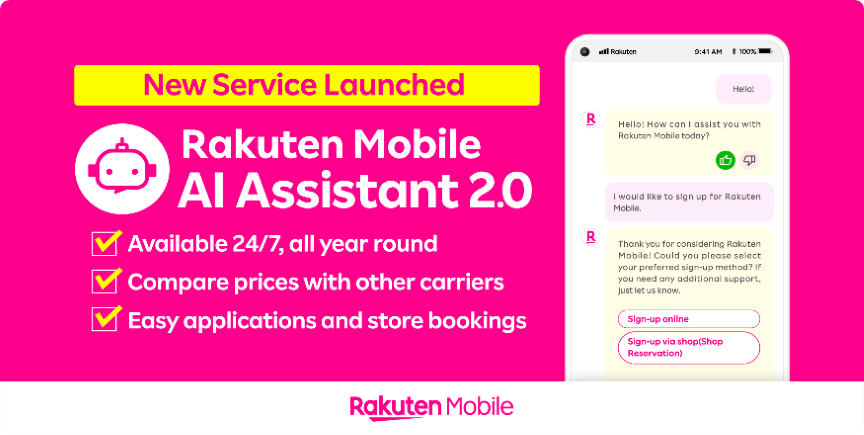
Rakuten Mobile has deployed Rakuten Mobile AI Assistant 2.0, an advanced AI-powered chat-based support system, to streamline customer interactions and improve accessibility. Integrated into the Rakuten Mobile Saikyo Plan official website, this assistant provides users with a centralized platform to find information about Rakuten Mobile services, book appointments at Rakuten Mobile Shops, compare plan prices, and even sign up for the Rakuten Saikyo Plan. Notably, the assistant is accessible to all users, including those without a Rakuten ID, making it a highly inclusive tool for customer engagement.
The assistant leverages AI to deliver personalized and tailored support, responding to user queries based on specific needs and eliminating the need for extensive online searches. Operating 24/7, it ensures customers can access solutions and information at any time, enhancing convenience and efficiency. Unlike traditional chat support systems, the AI assistant’s advanced functionality simplifies the customer experience by providing instant access to relevant resources and guiding users through complex processes with ease.
This deployment represents an extension of Rakuten Mobile’s commitment to integrating AI into its operations.
LG Uplus Deploys AI-Driven Call Agent to Enhance Customer-Centric Services

LG Uplus has implemented a customer-centric approach to AI innovation, focusing on solutions that enhance everyday user experiences. As part of its AI strategy, the South Korean operator has developed and deployed ixi-O, an advanced on-device AI call agent designed to tackle common customer challenges while prioritizing security and reliability.
Unlike traditional systems reliant on server-stored information, ixi-O operates entirely on the user’s device. This architecture allows it to instantly and securely perform tasks such as voice recording and conversational summaries without depending on remote processing. One of its standout features is its ability to detect phishing attempts. By analyzing the language, intonation, and context of calls, ixi-O can assess the likelihood of a scam and advise users in real time, offering enhanced protection without the need for pre-stored lists of suspicious numbers.
This deployment reflects LG Uplus’s commitment to addressing customer needs by blending innovation with practicality. The company’s broader strategy involves working with key partners, such as Google, while also strengthening its internal capabilities to build effective and collaborative solutions. By focusing on AI-enabled services like ixi-O, LG Uplus is reshaping the customer experience, ensuring that technology delivers meaningful, user-centric outcomes.
SK Telecom Deploys AI Customer Service Support System with Telco-Specific LLMs

SK Telecom (SKT) has launched its AI Customer Service Support System, built on proprietary large language models (LLMs) and large multimodal models (LMMs) tailored to address the unique challenges of telecommunications. This deployment follows a year-long overhaul of SKT’s knowledge management system, incorporating extensive model optimization and the creation of training datasets designed with input from customer service experts.
A standout feature of the system is the AI Knowledge Search Assistant, a natural language interface that leverages Retrieval Augmented Generation (RAG) to provide agents with accurate, instant answers by integrating relevant data into responses. This eliminates manual searches and enhances operational efficiency.
The system also includes Intelligent Document Processing, which categorizes and processes customer-submitted documents automatically, and an Automated Post-Processing System for summarizing consultation results. These innovations streamline workflows, reduce service times, and ensure comprehensive record-keeping.
By transforming its contact centers into AI-driven operations, SKT has significantly improved efficiency and elevated the customer experience with precise, personalized support, setting a new standard for telco customer service excellence.
Pioneering the Future of Telecom with AI
The transformative power of AI is reshaping the telecom industry, and the strategies deployed by industry leaders underscore its potential to redefine connectivity, customer engagement, and operational resilience. From AI-native infrastructure to customer-focused innovation, telecom operators are pioneering a new era of intelligent solutions.
1. Building Future-Ready AI Infrastructures
SK Telecom’s GPUaaS deployment exemplifies the need for scalable and sovereign AI infrastructures. By integrating cutting-edge NVIDIA H100 and H200 GPUs with the AI Cloud Manager, SK Telecom has set a benchmark for AI-powered innovation, reducing AI training times and enabling faster deployment cycles. Such solutions offer telcos a pathway to stay ahead in an increasingly data-driven world.
2. Revolutionizing Customer Engagement
Rakuten Mobile’s AI Assistant 2.0 and SK Telecom’s domain-specific LLMs illustrate how AI can deliver hyper-personalized customer experiences. With capabilities like 24/7 accessibility, predictive analytics, and natural language processing, these tools enhance customer satisfaction by streamlining interactions and providing precise, actionable support.
3. Embedding Security at the Core
LG Uplus’s ixi-O AI call agent sets a new standard for integrating AI security features directly into telecom solutions. By operating entirely on-device, ixi-O ensures user privacy while providing advanced phishing detection through contextual language analysis. This approach demonstrates how AI can simultaneously address user concerns and regulatory compliance.
4. Simplifying AI Integration
Orange Business’s Live Intelligence deployment highlights the benefits of plug-and-play generative AI solutions. By leveraging multi-LLM architecture and SaaS delivery models, this initiative has transformed AI adoption, reducing complexity and making enterprise-grade AI accessible to businesses of all sizes.
5. Driving Collaborative AI Ecosystems
The emphasis on partnerships, such as SK Telecom’s collaboration with Lambda, demonstrates the importance of ecosystems in advancing AI capabilities. By combining internal expertise with external innovation, telcos can scale faster, unlock new opportunities, and create solutions that are as robust as they are flexible.
Charting the Road Ahead
As the telecom industry embraces AI-driven strategies, the potential to transform business models, drive operational efficiency, and redefine customer engagement has never been greater. These deployments serve as a blueprint for other operators looking to harness AI’s full potential. By prioritizing innovation, collaboration, and security, telecom operators can solidify their positions as leaders in a digitally connected future.